Dashain festival is the biggest festival for Hindus. It is celebrated worldwide by the Nepalese diaspora with great fanfare and rejoicing. Dashain starts from the bright fortnight of the moon to the full moon day of Ashwin (September-October). This festival is known for a great family reunion as people return from all parts of the world and different parts of the country to receive Tika and blessings from seniors and celebrate the festival. And is the best time to tour and trekking in Nepal.
Dashain festival is the affection where people share their best wishes; children also have a reason for enthusiasm. People are seen happy and excited during the festival. Dashain is a religious festival and is performed by worshipping goddess Durga in honor of her for killing a demon called Mahisashur and freeing mankind as well as gods and goddesses from his terror. Another mythology has it that Lord Ram had killed the demon Ravana. Dashain is celebrated to commemorate the victory of truth.

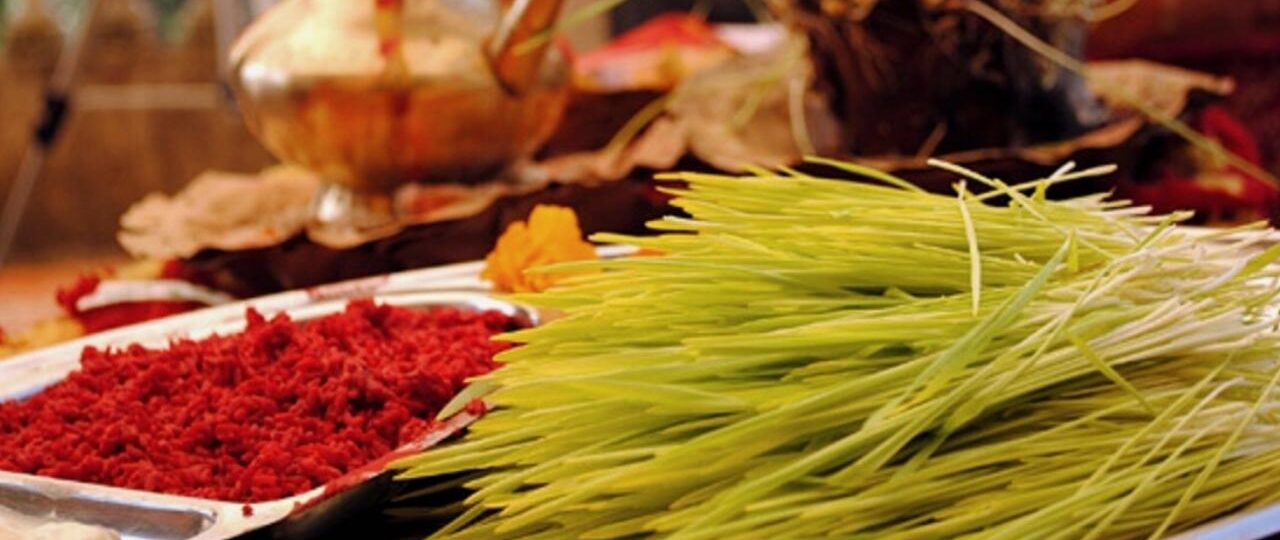
Dashain festival is a blend of Hindu Tantrik and animistic harvest festival traditions. Though Dashain is celebrated for 15 days, the main festivities are on the first ten days. On the first day, called Ghatasthapana, the “Dashain Ghar” or particular worship room, is set up; this room is used to worship the Nava Durgas (the nine manifestations of goddess Durga), to whom this festival is consecrated. This day is the start of the festival, and on this day as Jamara is planted on an altar made of sand brought from nearby rivers. A Kalash (a ceremonial vase) is installed at the center Of the altar, where barley and maize seeds are sown for Jamara. The altar is made in a dark place so that the jamara turns yellow. It is left for nine days to grow and is plucked on the tenth day.
Day second to sixth days of Dashai is less important than the other days. During these periods, it is said that the Goddess Durga revealed herself as Brahrnacharini, Chandraghanta, Kushmanda, Skandamata, and Katyayani. The seventh day of the festival is the day of Phulpati. On this day, people introduce Phulpaati (flowers and leaves already plucked for worship) on the altar. Similarly, Phulpati is brought from Gorkha to Kathmandu and introduced in the Dashain Ghar of Basantapur Durbar Square. The festival’s eighth day is Maha Asthami — the day of animal sacrifices. Temples of goddesses all over Nepal receive sacrifices, ranging from male goats and water buffaloes to ducks and chickens. Blood is symbolic of its fertility, which is offered to the goddesses. This meat is taken home and cooked as “prasad”; Parsad means food blessed by divinity. This revealing of the Goddess is taken as the fiercest form of all. Sacrifices are offered in almost all the temples of goddesses as they represent the various manifestations of goddess Durga’s divine power or Shakti. Sacrifices are also made in kots (armouries of forts) and army barracks throughout the country. The night of Maha Ashtami is called Kalaratri, which means “Dark Night.”
The ninth day of the Dashain festival is Maha Navami, and on this day, Maha Gauri had her last fight with the demon Mahisashur. The Malla king’s family deity Taleju Bhawani of Hanuman Dhoka and Bhaktapur, has opened annually on this very day. Also, people have vehicles, weapons, and machinery equipment to worship them on this day. Official military sacrifices are also performed on this day. The army personnel sacrifice 54 he-goats and 54 male water buffaloes to the Goddess and worship their weapons and arsenal. The 10th day is called Vijaya Dashami. It is the most auspicious day in the Dashain festival. On this day, people receive Tika and blessings from their elders. During the festival, all the members of the family, especially the children, are given new dresses. They visit their relatives. They also eat meat and other favorite food items. Playing a swing is another feature of this festival.
While putting Tika, with the blessing of elders, some amount is also given as a symbol of love called Dakshina. Previously, it was given as a symbol of a valuable thing and a token of love, but now it has been a kind of compulsion and also worthless self-respect for this. Some people take loans from others and spend them in show business.
To celebrate the Dashain festival genuinely, one needs to have faith in the norms and values of the traditional culture. The process of offering and receiving Tika continues for the next five days, and the Dashain festival ends with dismantling of the ceremonial vase in the Dashain Ghar.
Some tourists can be seen enjoying the festivals by receiving Tika from their friends. Some tourism entrepreneurs invite tourists to their houses to introduce festivals like Dashain.