Introduction
Nepal’s festivals are a vivid tapestry of color, devotion, and deep cultural meaning—but few are as unique or emotionally resonant as Gaijatra, the Cow Festival. Held annually in August in the Kathmandu Valley, this extraordinary celebration blends sacred ritual with biting satire, laughter with loss, and mourning with music. Whether you’re a curious traveler, a culture lover, or someone exploring the spiritual ways communities deal with death, Gaijatra offers a powerful, unforgettable insight into Nepal’s heart. In this blog, we explore Gaijatra’s origins, traditions, regional variations, and offer a 10-day itinerary to help you experience the festival in all its dimensions.
Gaijatra (Cow Festival) – Overview and History
Gaijatra (Gai Jatra) is a uniquely Nepali festival of dancing, singing, mirth, and laughter held in the Kathmandu Valley in late July or August (Nepali month Bhadra). It honors family members who have died during the past year, helping communities grieve with humor and solidarity.
In Hindu belief, the cow is sacred – a goddess of wealth – and is thought to guide departed souls safely to heaven. Legendarily begun by 17th-century Malla King Pratap Malla (then ruler of Kathmandu) to console his grieving queen after the death of their son, Gaijatra evolved into an annual procession. Families who lost someone lead a decorated cow (or a young boy dressed as a cow) through the streets, symbolically helping the soul reach the afterlife. This belief stems from the idea that the cow can help the deceased cross the fiery Baitarni River (the mythic boundary between life and death) by sticking to its tail.
Gaijatra is thus both a solemn remembrance of the dead and a communal celebration of life. It allows bereaved families to “share in the sorrows” together and take comfort in knowing others also grieve – and laugh – alongside them.

Cultural Significance and Symbolism
Gai (“cow”) Jatra balances grief and joy. Cows (or costumed cow-imitators) are paraded with flower garlands, red tika, and offerings of rice and sweets. The festival’s key message is that death is universal and inevitable; seeing many families join the parade helped King Malla’s queen realize “she was not alone” in her loss. After the procession returns home, the cow’s trailing tail (on a youth in costume) is cut into strips and given to the family members to wear as amulets protecting against misfortune.
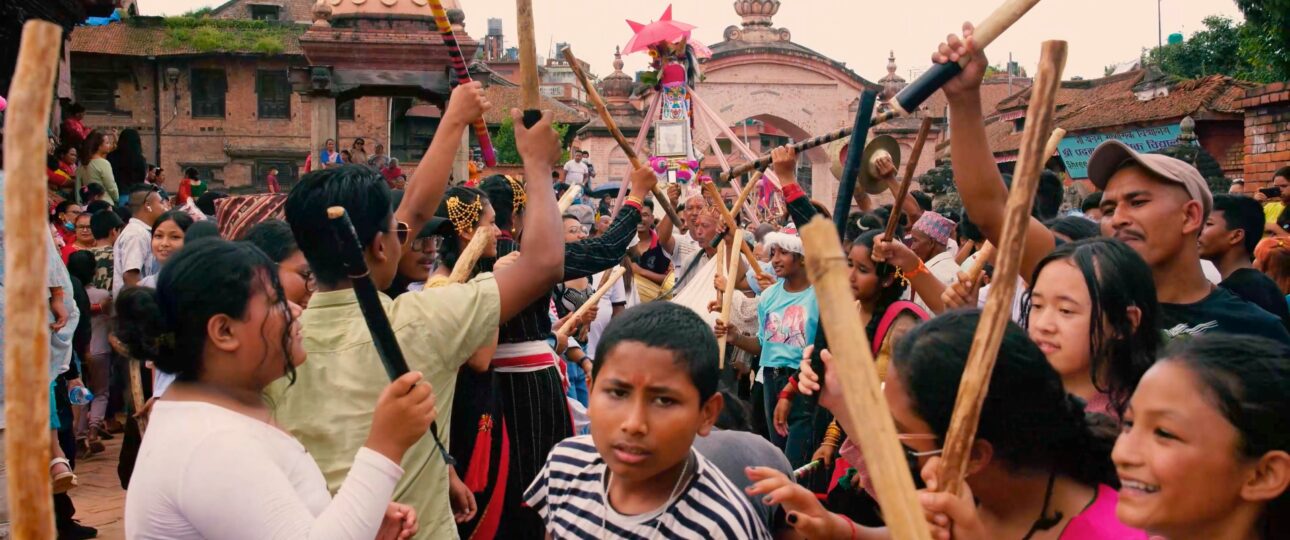
Gaijatra is also a time for satire and comedy. Street performers and newspaper cartoonists lampoon social issues and politics, reflecting Nepal’s ancient “freedom of speech” tradition. Men and boys often dress in outlandish costumes – including cross-dressing (men in the hakupatāsi black sari) and demon masks – and perform humorous skits. For example, Bhaktapur’s Ghintang Ghisi stick dance is performed by masked participants in a long procession, followed by rhythms of clashing wooden sticks. This open celebration of humor is seen as cathartic; King Malla originally ordered citizens to “do whatever they can… to make [the queen] laugh”. Today’s festival continues that spirit: spectators are encouraged to smile, laugh, and even join in by wearing costumes or helping distribute food.
When and Where It’s Celebrated
Gaijatra falls on the first day of the waning moon in Bhadra (late August) each year. In 2025 it will be observed on August 10 (Sunday) in Kathmandu. While Kathmandu and Bhaktapur Valley observe it most elaborately, nearby towns like Kirtipur and Madhyapur Thimi also have their own processions. In Kathmandu city the parade traditionally marches past key temples and Hanuman Dhoka (the old royal palace) so that local kings of yore could tally deaths. In Bhaktapur, the festival spans eight days rather than one. The centerpiece in Bhaktapur is the Taha-Macha, a tall bamboo-and-cloth chariot carrying a photo of the deceased; dozens of such chariots (one per bereaved family) roll through town, accompanied by dancers and music.
In contrast, Patan (Lalitpur) does not hold a large Gaijatra on the same day. Most Newars of Patan observe a related festival called Mataya Jatra (or Matayaa Jatra) two days later (following Janai Purnima). During Mataya, devotees carry large candles and offer prayers at temples throughout Patan city, honoring the dead in a quieter, candle-lit procession. Thus, Gaijatra in Patan has a different flavor and participation level than in Kathmandu or Bhaktapur. Bhaktapur’s version is considered the most “fun and entertaining” due to its long duration and unique dances. In contrast, Patan’s focus on Mataya means Newar residents may participate more in the September festivities than in mid-August. In all venues, however, outsiders will find street fairs, temple visits, and community music events to join in.
Local Perspectives and Community Involvement
For Kathmandu Valley Newars, Gaijatra is a communal expression of empathy. Residents view it as an opportunity to “come together, share grief, and find solace in communal support”. Families who lost loved ones prepare special offerings (such as beaten rice, curd, and coins) to give to the cows or costumed youths, believing these gifts bring good fortune and help the spirit’s journey. Neighbors and even complete villages join one another’s processions – in Bhaktapur, some communities coordinate entire town-long parades, complete with choirs, drums, and dancers.
Preparations are often a neighborhood affair. In the weeks before, men and women crafted masks and made the straw-and-paper cows used in Bhaktapur’s Taha-Machas. Boy scouts or youth groups practice the Ghintang Ghisi stick dance, and local committees plan satirical street plays. Many Bhaktapur toles (wards) take turns hosting community feasts on the 8-day festival, and young people rehearse Lakhey or Barahi dances for the final days. Even if foreigners join as observers, locals generally welcome them, especially if visitors show respect by following processional routes or trying Newari dress and food. As one Nepali guide noted, the day’s humor is all-embracing: “Anyone can make jokes about any social issue” during Gaijatra, a spirit aimed at political openness and collective healing.
Practical Tips for Tourists
- Dress Code: Modesty and comfort are key. Wear loose, breathable clothing in July–August’s humid weather. Many Nepalis dress traditionally on Gaijatra – women in sarees (often black hakupatāsi saris) or gunyā-cholo, and men in daura-suruwal or dhoti. Tourists can respectfully join the mood by wearing a dhoti-sarong or even a simple scarf in the local style. Cover shoulders and knees (especially for temple visits), whatever the outfit. Comfortable walking shoes are essential for uneven city streets. Also, prepare for occasional rain: carry an umbrella or light raincoat.
- Etiquette: Remember, this is a religious observance and a comedy spectacle. At temples (Pashupatinath, Boudha, etc.), follow Hindu/Buddhist etiquette – remove shoes, keep right, and maintain a calm demeanor. In processions, avoid stepping through or in front of performers; let the crowds pass slowly. Locals often offer observers snacks or blessings (tika), and accepting them graciously is polite. If you wish, you may also provide small packets of sweets or fruits to the families in a parade, which is considered a charitable act that aligns with Gaijatra tradition. Always ask permission when photographing locals in costume or prayer; most people are happy to pose, but families may be private about their mourning rituals.
- Health & Safety: Large crowds can form around parade routes, especially near Durbar Squares and the royal palace in Kathmandu. Keep personal belongings secure and stay with your group. Traffic will be heavily disrupted during the festival; avoid driving in central areas on Gaijatra day. Instead, use pre-arranged taxis or walk between sites. Stay hydrated and wear sunscreen – even monsoon skies can let in UV. Carry hand sanitizer (crowds and shared food offerings). Finally, check any public health advisories (as festival gatherings can spread illnesses) and ensure you have travel insurance.
- Cultural Sensitivities: Gaijatra blurs the line between solemnity and slapstick. Visitors should remember it’s not disrespectful to laugh or enjoy the absurd costumes – that is the point of the festival. However, avoid insensitive comments about death or mocking sacred symbols. If joining a procession, do so reverently; for example, if offered the cow’s tail strip or a ritual prasad, accept it with gratitude. Learn a few Nepali or Newari phrases (“Namaste”, “Dhanyabad” – thank you) to show courtesy. Refrain from pointing at, questioning, or filming grieving families; they are part of the ceremony’s focus on collective mourning. Finally, I appreciate that political satire is common during Gaijatra, but I avoid joining in controversial chants or jokes as a foreigner.
10-Day Kathmandu Valley Gaijatra Itinerary
Itinerary Overview:
Our 10-day cultural tour builds up to, celebrates, and then explores the aftermath of Gaijatra, while also showcasing the valley’s heritage. It combines festival events with guided temple tours, Newari cuisine tastings, markets, and workshops. Each day includes morning and afternoon activities, with evenings reserved for performances or optional classes. The tables below summarize our plan and key sites.
| Day | Main Activities (Kathmandu Valley) |
| Day 1 (Arrival) | Morning: Arrive Kathmandu, hotel check-in. Afternoon: Orientation walk in Thamel and Asan bazaar (spice shops, local sweets). Evening: Welcome dinner featuring Newari cuisine (e.g. chatamari, bara, sweets) and a traditional cultural show. |
| Day 2 (Heritage Tour) | Morning: Arrive Kathmandu, hotel check-in. Afternoon: Orientation walk in Thamel and Asan bazaar (spice shops, local sweets). Evening: Welcome dinner featuring Newari cuisine (e.g., chatamari, bara, sweets) and a traditional cultural show. |
| Day 3 (Temple Circuit & Market) | Morning: Visit Pashupatinath Temple (Hindu cremation ghats) around sunrise; then stop at Boudhanath Stupa (Buddhist pilgrimage site). Afternoon: Lunch at Newa Goan restaurant (Newari specialties). Explore the Tibetan market around Boudha, buying handicrafts and Buddhist thangka art. Evening: Relax or join a community folk music evening in Thamel. |
| Day 4 (Gaijatra in Kathmandu) | Morning: Guided tour of Kathmandu Durbar Square (UNESCO): visit Kumari Temple, Taleju Temple, etc. Afternoon: Walk to nearby Kasthamandap and Hanuman Dhoka. Sample a Newari baji snack in a local eatery. Evening: Optional Newari cooking class (learn to make momo and sel roti) or attend a Nepali folk dance performance. |
| Day 5 (Bhaktapur & Festival) | In the morning, head to Patan Durbar Square (Lalitpur). Guided visit: Krishna Temple, Patan Museum, Patan Royal Bath. Learn about Mataya Jatra. Afternoon: Participate in candle-light procession (Matayaa Jatra) around Patan’s temples (if coinciding with Mataya festival); locals parade burning candles and sing for the dead. Otherwise, visit nearby artisan workshops (pashmina weaving or paubha painting). Evening: Dinner of Newari New Year’s Samay Baji platter at a local eatery. |
| Day 6 (Patan and Matayaa Festival) | Morning: Optional sunrise yoga or meditation session at Swayambhunath Temple (monks’ guidance). Midday: Newari cooking class in Patan or Kathmandu: make chatamari, dahl-bhat, pickles with a local chef. Afternoon: Free time or visit a rural homestay near Kathmandu for a village life experience. Evening: Traditional Newari music and Lakhey dance show at a community hall. |
| Day 7 (Cultural Immersion & Optional Yoga) | Morning: Excursion to Kirtipur (ancient Newar town). Guided walk through Kirtipur Bazaar and Bagh Bhairab Temple, noting local Gaijatra customs. Afternoon: Drive to Madhyapur Thimi. Visit Dattatreya Temple and Thimi pottery square, and watch artisans craft clay pots. Evening: Try a community festival dinner or optional visit to a Nepali home for a vegetarian dal-bhat-tarkari meal and storytelling. |
| Day 8 (Kirtipur & Village Tour) | Morning: Visit a wood-carving workshop in Woodcarving Square (Kathmandu) or a Thangka (scroll painting) class. Afternoon: Free for shopping in Asan/Thamel markets (souvenirs, pashmina, spices). Optional extra: short hike or bike ride around Budhanilkantha (lying Buddha statue). Evening: Farewell dinner at Garden of Dreams with a Nepali folk dance performance. |
| Day 9 (Artisans & Free Time) | Morning: Travel to Bhaktapur Durbar Square (30-minute drive). Guided tour of the UNESCO site (55 Window Palace, Nyatapola Temple). Observe Taha-Macha (chariots) parading through the square. Afternoon: Witness the Ghintang Ghisi stick dance and masked performers at Bhaktapur Gaijatra. Explore Pottery Square and nearby local eateries (try buffet or chicken bara). Evening: Dinner at a traditional Newari restaurant in Bhaktapur; watch a Nil Barahi or Mahakali dance if scheduled. |
| Day 10 (Departure) | Morning: Final sightseeing – perhaps Budhanilkantha temple or local jewelry/cloth market. Midday: Depart Kathmandu (airport transfer arranged). Afternoon: (Post-departure) – end of services. |
Key Locations and Experiences:
The following table summarizes the main sites and activities referenced above:
| Place / Experience | Category | Highlights |
| Kathmandu Durbar Square | UNESCO Heritage Square | 17th c. royal palace complex; Kumari (living goddess) shrine; focal point of the Gaijatra procession. |
| Pashupatinath Temple | UNESCO World Heritage (Hindu) | The holiest Shiva temple in Nepal, morning aarti on the Bagmati River cremation ghats. |
| Boudhanath Stupa | UNESCO World Heritage (Buddhist) | Massive stupa and pilgrimage center; atmosphere of prayer flags and monk chants. |
| Swayambhunath (“Monkey Temple”) | UNESCO World Heritage (Buddhist/Hindu) | Hilltop stupa with city views; iconography of both faiths. |
| Bhaktapur Durbar Square | UNESCO Heritage Square | Medieval Newar city center; watch Taha-Macha chariots and Ghintang Ghisi dance during Gaijatra. |
| Patan Durbar Square | UNESCO Heritage Square | Lalitpur royal courtyard; nearby Patan Museum (former palace) and site of the Mataya candle procession. |
| Asan Market (Kathmandu) | Traditional Bazaar | Visit the bustling Nepali market, taste Newari street foods (e.g., sukuti and tamari dumplings), and shop for incense and spices. |
| Cooking Class / Food Tasting | Culinary Experience | The holiest Shiva temple in Nepal, the morning aarti on the Bagmati River cremation ghats. |
| Ghintang Ghisi Dance | Festival Performance | Colorful stick-dance parade in Bhaktapur (and parts of Kathmandu) during Gaijatra. |
| Lakhey Masked Dance | Cultural Performance | Hands-on lesson in Newari cuisine (e.g. chatāmāri, bara, sel roti); guided local delicacies-tasting. |
Conclusion
Gaijatra is more than just a parade of cows and costumes—it’s a deeply human expression of grief, resilience, and collective joy. It reminds us that laughter can heal, that death is a part of life, and that communities grow stronger by sharing their sorrow and celebration. Whether you’re witnessing masked dancers in Bhaktapur or sampling Newari sweets in Kathmandu, Gaijatra invites you to observe and participate in a festival where satire is sacred and remembrance is a communal act. For travelers, it’s an eye-opening chance to witness Nepal’s spiritual depth, artistic vibrancy, and communal warmth in one festive journey.
Ready to experience Nepal’s most heartfelt and humorous festival firsthand?
Plan your visit to Gaijatra 2025 (August 10), join the vibrant processions, taste traditional Newari cuisine, and explore the rich cultural heritage of Kathmandu Valley. Whether you’re a solo traveler or coming with