Introduction
I had dreamt of the Api Himal Base Camp Trek for years, seeking an adventure far from the well-trodden paths of the Annapurna or Everest regions. This trek promised a raw, unspoiled experience – indeed, guides describe it as “a paradise for adventure lovers”. I flew from Kathmandu to Dhangadhi and felt the terrain change from low Terai plains to rising jungle-covered foothills. A long jeep ride took us to Latinath, and the next morning our trek began in earnest.
I was motivated by the chance to stand in the shadow of Api Himal (7132 m) and explore villages where few tourists venture. I knew the challenges: long days on steep trails, cold nights, and the logistics of a deeply remote region. My expectation, however, was that the journey itself—through pristine forests, past holy lakes, and into rugged high country—would be every bit as rewarding as the goal of reaching Api’s base.
Itinerary/Route
Our actual schedule followed the outline above. We started by crossing the high-range highway into Darchula district, then by jeep to Latinath (1004 m) on Days 3–4. From Latinath a mule trail began, climbing steadily each day. We trekked through terraced farmland and pine forests to Paribagar (1770 m) and Makarigaad (1470 m). The path ascended through rhododendron groves to Siti village (2254 m).
On Day 7, our longest day, we hiked to Domal (2950 m), a high meadow with sweeping views. Day 8 took us above the treeline to Dhauli Odar (Lower Base Camp, 3548 m). Day 9 was the highlight: a steep climb to Api Himal Base Camp at ~3861 m. We pitched camp under the peak and then returned to Dhauli Odar for the night. The return days (10–12) reversed our ascent, and on Day 13, we drove back to Dhangadhi. This route covered major villages and key stopovers exactly as outlined in the published itineraries.
Preparation & Planning:
Reaching the Api Himal Base Camp requires careful preparation. Physically, the trek is graded moderate but involves long days (often 6–8 hours) over rough trails. We trained with long hikes and aerobic conditioning beforehand. At base camp, altitudes climb to 3861 m, so while technical climbing skills aren’t needed, proper acclimatization is essential.
Regarding paperwork, this area is restricted: we obtained an Api Nampa Conservation Area permit, a Restricted Area Permit, and TIMS cards. We arranged these through a licensed trekking agency. Nepali regulations mandate trekking in groups (min. 2) with a licensed guide. We booked flights from Kathmandu to Dhangadhi well in advance and arranged a Jeep for the village approach. Our backpacks held layered clothing for subzero nights, sleeping bags (supplied by the agency), sunscreen, and a first-aid kit.
We also brought water purification tablets. We had pre-booked Kathmandu hotels and a lodge in Dhangadhi; beyond that, we relied on our guide and porter for camp life. Given the remoteness, travel insurance with helicopter evacuation coverage was a must. With these plans, we were ready to tackle the western wilderness.
Daily Journal
Day 1–2: I arrived in Kathmandu and spent a day sorting permits and gear. The city bustle felt a world away from what awaited. On Day 2, we flew west to Dhangadhi – the plane swooped low over rice fields and rivers before rising into the hills. From Dhangadhi (109 m), we drove to Gokuleshwar. I remember the air growing cooler as we moved into the mountains, crossing suspension bridges over the Mahakali River. We camped at Latinath (1004 m) at a temple lodging that night, grateful for a hot meal before an early bedtime.
Day 3: From Latinath we set out in mid-morning. The first stage took us to Paribagar (1770 m) in about 5 hours. The trail was steep but well-graded, zigzagging through dense mixed forest. Tall pine and rhododendron trees flanked the path. At Paribagar, we met a small settlement of stone houses; local women carrying pots offered smiles. We stayed in a humble lodge there. As the sun set, fiery Himalayan peaks appeared above the hills – a beautiful preview of Mt. Api’s looming mass.
Day 4: We did Day 4 on our itinerary (trek Latinath→Paribagar) the previous day, so Day 4 in my journal was the trek to Makarigaad. We rose before dawn and hiked towards Makarigaad (1470 m). The morning air was crisp. Along the way, bright billows of wildflowers dotted the meadow stretches. We stopped at a small tea stall for Tibetan bread and honey. By midday, we reached Makarigaad, a slightly larger village. Here we camped and chatted with villagers weaving cloth by hand – they proudly showed us ancient wooden looms. The altitude was still low enough that I felt fine, though my legs were tired from the climb.
Day 5: We pressed upward from Makarigaad to Siti (2254 m). This was our longest day (≈8 hr), and I felt burns in my legs. The trail climbed through a lush valley with a river tumbling beside us. We crossed a few suspension bridges over icy streams (some swollen from seasonal melt). We crested a ridge by late afternoon and saw the high meadows below Siti village. Siti was peaceful, surrounded by pine and fir forests. As evening came, snow fell lightly – a sharp reminder we were gaining altitude. I layered up and cooked hot noodles for dinner in our mess tent.
Day 6: Siti to Domal (2950 m). We woke to frosty tents, but clear skies. Today’s trail was steep and rocky, pushing through bamboo groves and shrubby rhododendron. The cold thinned the air; each step felt heavier. By midday, we reached Domal, a windswept meadow surrounded by snowy ridges. The sight of our first 6000–7000 m peaks (Nampa, Kapchuli) above was stunning. I took a short rest on a stone overlooking the valley, legs aching but spirits high. We camped in Domal, grateful the day was over and thrilled by the panoramic sunset on the peaks.
Day 7: Domal to Dhauli Odar (3548 m). This was our gateway to the Api Himal base camp. Early on, we passed by a small turquoise lake called Kali Dhunga (Kali Dhunga Tal), skirted by prayer flags – a sacred spot for pilgrims. (We planned to return there after camp.) Pushing above the tree line, the air grew thin. The final push to Dhauli Odar was a grueling 4–5 hours of steady ascent. By late afternoon, we arrived at camp below the great walls of Api. I unrolled my sleeping bag, utterly exhausted but exhilarated: the world here felt close to the sky.
Day 8: Api Base Camp (3861 m). We woke in subzero stillness. From Dhauli Odar, it was a short hike to Api Himal Base Camp – only a couple of hours uphill. I was awed when I stepped into the meadow of Pilkandah (Api Himal Base Camp). Mt. Api’s sheer granite faces towered above us. We gathered around a cairn of stones and prayer flags; the sacred energy of the place was palpable.
After lunch, we retraced a smaller ridge to the glacial Kali Dhunga Lake (~4000 m). The lake was half-frozen, reflecting the blue sky and peaks. I dipped my fingers into the icy water as a local legend said, feeling humbled. We returned to Dhauli Odar camp, content but tired from the altitude.
Day 9: High Camp to Siti. After a relaxed morning soaking in the views, we descended, retracing yesterday’s path. We passed Domal and continued down to Siti (2254 m). The downhill was easier on the legs, and by mid-afternoon, we were back in the familiar pine woods of Siti. It felt surreal that we had stood at 3861 m the day before. The cold nights eased as we descended into the treeline again.
Day 10–11: We continued down over two more days: Siti back to Makarigaad, then to Latinath. Makarigaad, we enjoyed a proper Dal Bhat lunch with fresh vegetables from the terrace farms. At Latinath, we reached our first village from the start. We even had a hot shower in the local lodge – a luxury after a week of camping.
Day 12–13: The final trek was over; we hitched a ride back to Dhangadhi. Reflecting on the trail, I felt pride and relief: the Api Himal Base Camp trek had tested me physically and mentally. I was also grateful for the group’s camaraderie. A celebratory dinner in Kathmandu later helped me realize this was one of my most challenging yet fulfilling adventures.

Practical Information:
Accommodation:
In Kathmandu and Dhangadhi, we stayed in decent hotels. On the trail, accommodations were rustic. A few villages (Latinath, Paribagar, Makarigaad) have basic lodges or homestays; beyond those, we camped every night. Our guide provided tents, and our porter carried the cooking gear.
Food:
Our cook prepared simple meals each day. Expect mostly dal-bhat (lentil curry with rice), noodles, bread, eggs, and local vegetables. Hot soup and tea were welcome staples in the cold evenings. We carried snacks (energy bars, dried fruit) for long days.
Permits:
All permits (Api Nampa conservation area, restricted-area permit, TIMS) were obtained through the agency. Our guided 15-day trip costs roughly USD 2000 – 3000 per person, including inbound flights, land transport, guide/porter, accommodation, and meals. We budgeted an extra $500–$1000 for personal expenses (drinks, tips, extra snacks).
Transport:
Flights Kathmandu→Dhangadhi are convenient; alternatively, an 18–20h bus ride can be taken. From Dhangadhi, we arranged jeep transport to Gokuleshwar/Latinath.
Best Season:
We trekked in late autumn; generally, the best times are spring (Mar–May) and autumn (Sep–Nov), when the weather is dry and skies are clear. The monsoon (summer) brings rain and landslides, while winter snows can close passes.
Connectivity & Safety:
Mobile coverage disappeared after the first couple of days. There are no ATMs after Dhangadhi—carry cash (Nepal rupees) for all purchases. Hot showers and Wi-Fi are rare on the trail (some lodges may charge for charging phones). The region is very remote; infrastructure is basic, and medical facilities are minimal. We had a satellite phone for emergencies. It’s wise to have good travel insurance (including helicopter evacuation).
Highlights & Attractions
Towering Himalayan Vistas:
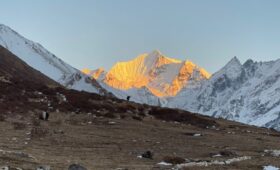
Each day revealed new sights of massive snow peaks. Mt. Api and Mt. Nampa loomed above the valley as constant sentinels. The photo below, taken en route to Api Himal base camp, shows the jagged spires we hiked among. These panoramas of white summits and deep blue skies were breathtaking.
The Api Himal range is seen from the high trail (approaching Dhauli Odar).
Sacred Kali Dhunga Lake:
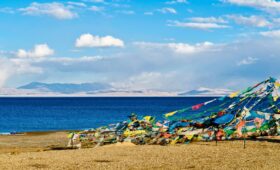
Near Api Himal Base Camp lies a high-altitude lake called Kali Dhunga (Kaali Dhunga Tal, ~4000 m). We hiked from base camp and found a glacial pond hemmed by prayer-flagged rocks. It was half-frozen in the morning chill – a serene, almost spiritual spot. (Legend says it sprang from Lord Shiva’s blessing.)
Kali Dhunga Lake (approx. 4000 m) above Api Himal Base Camp. Locals revere it and offer mirrored mountain reflections.
Cultural Immersion:
We spent time in remote villages like Ghusa, Makarigaad, and Simar. The local people (many of the Khas caste, plus Byansi/Sauka and Magar communities) greeted us warmly. We observed Buddhist and Bon ceremonies and even a small jatra (festival) in a hillside temple. One night in Makarigaad, a family invited us for tea and bread; their old wooden house was lined with looms and prayer flags—a timeless view. The Api Himal trek is as much about people as mountains.
Wildlife & Nature:
Trekking through Api Nampa, we felt surrounded by wildlife. The forests here host endangered species – trekkers might glimpse musk deer or Himalayan pheasants. On one morning ascent, we saw red panda tracks in the snow (they are said to roam here). Birdlife was rich too – our guide pointed out monal pheasants and eagles soaring overhead. And the flora was spectacular: in spring the slopes burst with rhododendron blooms, while fall brought golden meadows of barley and buckwheat.
Utter Solitude:
By far, the quiet of this trek stands out. Unlike popular trails, we passed very few other groups, so often we had the valley to ourselves. Campfires crackled under a canopy of stars with just the sound of wind in the trees. I will never forget the stillness of that wilderness.
Tips & Recommendations
Train and Acclimatize:
Prepare with long hikes and cardio; the trail has sustained climbs and descents. Though not technical, it is physically demanding. If you aren’t used to mountains, consider a local short trek (e.g., in Langtang or the Everest region) beforehand.
Hire Guide/Porter:
Trekking with a licensed guide is required (and wise) for navigation and logistics. Porters make the journey more enjoyable by carrying your heavy gear. We had one porter per two trekkers. The guides here know the unmarked trails well.
Pack Essentials:
Bring a warm sleeping bag (we rented from the agency), a down jacket for cold nights, and layers for hiking. Carry a water filter or purification tablets; boiled water is safest. Sun protection (sunblock, hat, sunglasses) is vital above the tree line. Headlamps and portable chargers are advantageous since electricity is scarce.
Carry Cash:
ATMs vanish after Dhangadhi. We brought enough Nepalese rupees to cover all meals, drinks, and small purchases (no souvenir shops on trek, mostly home-grown goods). ATMs in Kathmandu and Dhangadhi are reliable.
Respect Local Culture:
We always asked before photographing villagers. Learn a few Nepali or Byangsi greetings; the locals appreciated our attempts. Also, note that alcohol is generally available only in the towns (there are hardly any bars on the trail). Pack any medications you might need—pharmacies up here are nonexistent.
Weather Preparedness:
Even in summer, carry rain gear—downpours can hit lower trails. In winter, deep snow can make passes impassable (a few treks in Dec–Feb). Always check flight schedules—we had a backup bus option in case of flight delays due to mountain fog.
Safety First:
The Api Himal region is remote and has limited medical access. Carry a basic first aid kit and altitude sickness medication. Share your itinerary with someone back home, and consider a satellite device if traveling alone.
Conclusion/Reflections
By the end of the Api Himal Trek, I felt I had touched a hidden corner of Nepal. Living for days without modern comforts taught me simplicity. Crossing the high meadow at Api Himal Base Camp and feeling on top of the world was humbling. I gained a deeper appreciation for the resilience of mountain communities and the delicate balance of high-altitude ecosystems.
In the words of one source, “By visiting the Api Nampa Conservation Area, you’re not just exploring Nepal’s natural wonders — you’re helping sustain a way of life”. That sentiment stuck with me. This journey to the Api Himal Base Camp challenged me unexpectedly and reconnected me with nature and myself. I encourage any adventurous reader: if you yearn for solitude and raw beauty, consider the Api Himal trek. It’s tough, but the personal and scenic rewards are immense.
Have you ever trekked in a remote part of Nepal or another country? What appeals to you most about going “off the beaten path”? If you have questions about the Api Himal Base Camp trek, from training to the best seasons, ask in the comments below. I’d love to share more details or hear about your adventures in the Himalayas. You can also check out other trekking options on our site!