Standing at 4,500 meters above sea level, with the towering silhouette of Machapuchare piercing the azure sky before me, I finally understood why the Mardi Himal Trek has quietly emerged as one of Nepal’s most rewarding hidden treasures. This five-day journey through the Annapurna region delivered everything I had hoped for: pristine rhododendron forests, intimate mountain vistas, and a profound sense of solitude that the more crowded routes cannot offer. What began as an alternative to the bustling Annapurna Base Camp trek transformed into a profoundly personal pilgrimage through some of the Himalayas’ most spectacular and untouched landscapes.
The morning I stepped off the dusty trail onto the rocky approach to Mardi Himal Base Camp, exhausted but exhilarated, I knew this relatively new trekking route had captured something special. Unlike its famous neighbors, this trek offered an intimacy with the mountains that felt almost sacred—a chance to experience the raw beauty of the Himalayas without the crowds, yet with all the dramatic scenery and cultural richness that makes Nepal an extraordinary destination for mountain lovers.
Planning & Preparation
The decision to tackle Mardi Himal came after months of soul-searching and searching for what I truly wanted from my time in Nepal. While the allure of Everest Base Camp or the classic Annapurna Circuit was undeniable, something about this lesser-known route called to me. Perhaps it was the promise of walking beneath the majestic Machapuchare or the appeal of a trek that could be completed in just five days, making it perfect for my limited vacation time.
My preparation began three months before departure with a rigorous fitness routine focused on cardiovascular endurance and leg strength. Weekend hikes with a loaded backpack became my ritual, gradually building up to eight-hour treks in my local mountains. Mentally, I prepared by reading everything I could about the route, studying topographical maps, and learning basic Nepali phrases to connect with local communities.
Gear selection proved crucial for this trek’s diverse elevations and weather conditions. I invested in high-quality hiking boots, layered clothing systems capable of handling everything from subtropical forests to alpine conditions, and reliable trekking poles for the steep ascents and descents. My pack included a down sleeping bag rated for sub-zero temperatures, knowing that nights at High Camp could be brutal.
The permit process was straightforward but essential. I obtained the Annapurna Conservation Area Project (ACAP) permit and the Trekkers Information Management System (TIMS) card in Pokhara, which required documents that support conservation efforts and ensure trekker safety. While new regulations technically require foreign trekkers to be accompanied by licensed guides, I discovered that enforcement remains inconsistent, and many independent trekkers still navigate the route solo.
The promise of authenticity ultimately drew me to Mardi Himal over its more famous counterparts. This route, officially opened only in 2012, retains a sense of discovery that the established circuits have lost to commercialization. I wanted to experience Nepal’s mountains as they were meant to be experienced—with wonder, reverence, and a healthy dose of adventure.

Journey to the Starting Point
My journey began in the lakeside paradise of Pokhara, where the reflection of snow-capped peaks danced on the serene waters of Phewa Lake. After a restful night in this gateway to the Annapurnas, I caught an early morning taxi for the winding drive to Kande, my chosen starting point for the trek. The 30-minute drive wound through terraced hillsides and traditional villages, each turn revealing glimpses of the massive peaks that would dominate my horizon for the next five days.
As our vehicle climbed the serpentine mountain road, the air grew cooler and the vegetation more lush. Passing through small settlements where children waved from doorways and elderly farmers tended to their crops, I felt the familiar pre-adventure butterflies mixing excitement with apprehension. The driver, a weathered local man with kind eyes, shared stories of the changing landscape and pointed out distant peaks that would soon become intimate companions.
Arriving at Kande, I was struck by how quickly the urban energy of Pokhara faded into something more primal and peaceful. The trailhead bustled with international trekkers and local porters preparing for various routes into the Annapurna region. Taking my first steps onto the mountain path, I felt that unmistakable shift in consciousness that comes with leaving the motorized world behind—suddenly, every step would be powered by my determination and will.
Day-by-Day Trekking Narrative
Day 1: Kande to Australian Camp (2,100m)
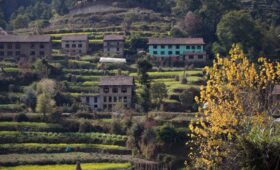
The first day was a gentle introduction to the rhythm of mountain walking. From Kande, the trail initially descended through traditional villages before steadily climbing toward Australian Camp. The path wound through terraced fields where local farmers cultivated potatoes and barley, their weathered faces breaking into warm smiles as I passed.
The morning air was crisp and filled with the sounds of rural life—roosters crowing, children laughing on their way to school, and the distant tinkling of bells from grazing buffalo. As I climbed higher, the vegetation changed, transitioning from agricultural land to mixed oak and rhododendron forests. Even without their spring blooms, these ancient trees created a cathedral-like atmosphere that made each step feel reverent.
Reaching Australian Camp after six hours of steady walking, I was rewarded with my first dramatic mountain panorama. The peaks of the Annapurna range stretched across the horizon like sleeping giants, their snow-covered summits glowing pink in the late afternoon light. The teahouse where I spent the night was simple but welcoming, run by a Gurung family whose hospitality immediately made me feel at home.
Day 2: Australian Camp to Forest Camp (2,550m)
The second day proved more challenging, with steeper terrain and longer stretches through dense forest. Leaving Australian Camp in the pre-dawn darkness, I watched the sun slowly illuminate the peaks around me, transforming the landscape from mysterious silhouettes to sharp, defined mountains that seemed close enough to touch.
The trail to Forest Camp lived up to its name, winding through primeval forests where massive rhododendron trees created a green tunnel overhead. The silence was profound, broken only by the occasional call of Himalayan pheasants or the rustle of langur monkeys moving through the canopy above. These forests felt ancient and untouched, reminding me why the Annapurna Conservation Area represents such a critical protected ecosystem.
As I climbed higher, the air became noticeably thinner, and I paused more frequently to catch my breath and admire the increasingly dramatic views. The trail was well-marked but required careful attention, especially on steep sections where loose stones could easily cause a slip. By afternoon, when I finally reached Forest Camp, I was exhausted but exhilarated by the wildness of the terrain I had traversed.
Day 3: Forest Camp to High Camp (3,550m)
Day three marked the transition from forested foothills to alpine terrain, and with it came a dramatic shift in landscape and physical challenge. The morning began with a steep climb out of the forest zone, and within hours, I found myself walking along an exposed ridge with spectacular 360-degree mountain views.
This was where the Mardi Himal trek distinguished itself from other regional routes. Instead of following crowded valleys, the trail traced a narrow ridge that offered constantly changing perspectives on the surrounding peaks. To my left, the massive bulk of Annapurna South dominated the skyline, while ahead, the perfect pyramid of Machapuchare grew larger and more imposing with each step.
The final High Camp approach tested my physical endurance and mental resolve. The altitude was beginning to affect my breathing, and the exposure along the ridge demanded careful attention to footing. But as the afternoon wore on and High Camp finally came into view, perched dramatically on a narrow saddle between peaks, I felt a surge of accomplishment that made every labored breath worthwhile.
The night at High Camp was magical but harsh. Temperatures plummeted well below freezing, and I found myself layering every piece of warm clothing I had brought. But stepping outside the teahouse after dinner to witness the stars blazing with an intensity impossible at lower elevations made the cold entirely worthwhile.
Day 4: High Camp to Base Camp and Return to Low Camp (3,100m)
Summit day began at 4:30 AM with a thermos of hot tea that felt like liquid life in the frigid pre-dawn air. The final push to Base Camp required three hours of steady climbing over increasingly rocky and exposed terrain. As the sun rose, painting the surrounding peaks in shades of gold and grew, I felt like I was walking through a landscape designed by the gods themselves.
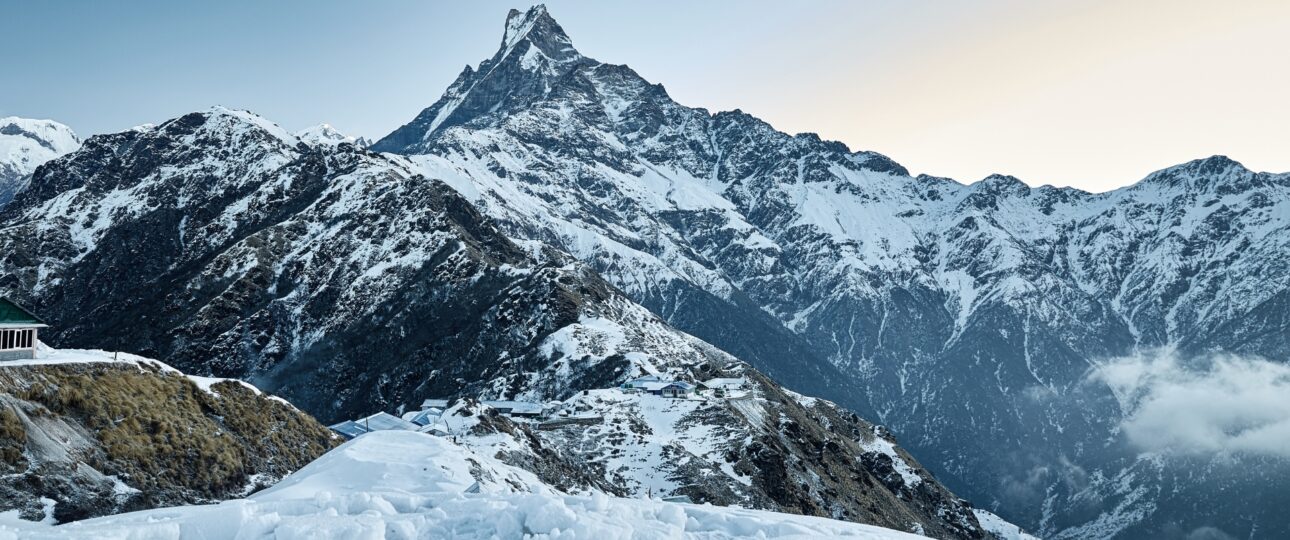
The approach to Mardi Himal Base Camp at 4,500 meters was perhaps the most spectacular section of the entire trek. The trail wound across alpine meadows and rocky moraines, with Machapuchare looming so close that I could see individual ice formations on its flanks. The sense of scale was overwhelming—I felt simultaneously insignificant and profoundly connected to the immense forces that had shaped this landscape over millions of years.
Reaching Base Camp itself was an emotional moment. Standing on this high plateau surrounded by the world’s most beautiful peaks, I understood why mountaineers reverently speak of the Himalayas. The view encompassed not just Machapuchare and the Annapurna range, but extended to distant peaks I couldn’t even identify—a 360-degree panorama of snow, ice, and rock representing the essence of high mountain beauty.
The descent to Low Camp that afternoon provided welcome relief from the altitude and a chance to process the incredible scenery I had just experienced. Each step downward brought warmer air and easier breathing, but also a growing awareness that this extraordinary journey was beginning to wind toward its conclusion.
Day 5: Low Camp to Sidhing and Return to Pokhara
The final day of trekking offered a bittersweet blend of satisfaction and melancholy. The trail from Low Camp descended rapidly through changing ecosystems, from alpine meadows to rhododendron forests and finally to the subtropical vegetation near Sidhing. After five days in the high country, the warmth and humidity of lower elevations felt almost tropical.
The descent was tricky on the knees but easy on the soul, providing ample time to reflect on the journey and absorb the memories I had created. Passing through village after village, I was struck by how quickly I was returning to the world of motor vehicles, internet connections, and modern conveniences—luxuries that had seemed utterly irrelevant just hours before.
A short drive from Sidhing returned me to Pokhara, where a hot shower and cold beer marked the official end of my Mardi Himal adventure. But as I sat on my hotel balcony that evening, watching the peaks glow in the sunset, I knew something fundamental had shifted inside me during those five days in the mountains.
Highlights & Challenges
The Mardi Himal trek delivered moments of beauty so profound they felt almost spiritual. Standing on the ridge between High Camp and Base Camp, with Machapuchare rising like a temple spire directly ahead and the entire Annapurna range spreading out to either side, remains one of the most spectacular sights I have ever witnessed. The intimacy of the route—its narrow ridges and proximity to major peaks—created a sense of connection with the mountains that felt deeply personal.
Equally memorable were the quieter moments: sharing tea with local families in remote teahouses, listening to the profound silence of high-altitude nights, and walking through rhododendron forests that felt like natural cathedrals. The trek’s relatively recent opening meant that commercialization remained minimal, preserving an authenticity that enhanced every interaction and view.
The challenges, however, were real and demanding. Altitude affected me more than expected, particularly during the final push to Base Camp, where each step required careful attention to breathing and pace. The weather proved unpredictable, with clear mornings giving way to afternoon snow showers that tested both my gear and resolve. Nights at High Camp were brutally cold, and I learned to appreciate the simple luxury of warmth in a way that sea-level living never teaches.
Perhaps the most significant challenge was mental, pushing through moments of doubt and fatigue when the trail seemed endless and the destination impossibly far. But these struggles made the eventual success more meaningful, teaching lessons about perseverance and self-reliance that extended far beyond the mountains.
Reflections & Takeaways
The Mardi Himal trek changed me in subtle and profound ways. Living for five days with only what I could carry on my back stripped away the non-essential and highlighted what truly matters—health, human connection, and the simple pleasure of putting one foot in front of the other toward a meaningful goal. The mountains demanded presence in a way that modern life rarely does, requiring complete attention to immediate physical and environmental realities.
Most significantly, the trek taught me the power of choosing less-traveled paths. While thousands of trekkers flock to Everest Base Camp or the Annapurna Circuit, this relatively unknown route offered experiences that felt uniquely mine. The ridge walking, the intimate mountain views, and the sense of discovering something special created memories that feel more personal and authentic than any crowded tourist destination could provide.
I learned that physical challenges become mental victories when approached with the right mindset. Each steep ascent that initially seemed impossible became another step in a larger journey, teaching patience and persistence that have served me well beyond the mountains. The trek also reinforced my appreciation for local cultures and the resilience of people who call these harsh environments home.
Would I recommend the Mardi Himal trek? Absolutely, but with the caveat that it requires genuine preparation and respect for the mountains. This isn’t a casual weekend hike—it’s a serious undertaking that rewards those willing to invest the necessary effort with experiences that will last a lifetime.
Practical Trekking Tips
Based on my experience, I strongly recommend visiting during either spring (March to May) or autumn (October to November) when weather conditions are most stable. Spring offers the bonus of rhododendron blooms that transform the forests into gardens of pink and red, while autumn provides the clearest mountain views and most reliable weather patterns.
Acclimatization proved crucial for enjoying the higher elevations. Spending an extra night at Forest Camp or taking rest days when needed significantly improved my energy levels and overall experience. The altitude gain from Pokhara to Base Camp is substantial, and rushing the process does no one well.
Trail markings were generally adequate but not always obvious, particularly in fog or poor weather conditions. A detailed map and basic navigation skills proved invaluable, especially on the ridge sections where the path could become unclear. Mobile phone coverage was sporadic above Forest Camp, making communication with the outside world impossible for much of the trek—a blessing in disguise for digital detox.
Water sources were reliable throughout most of the route, though I always carried purification tablets as backup. The teahouse meals were generally excellent, featuring traditional dal bhat alongside international options, though variety decreased at higher elevations. Respecting local customs—removing shoes in lodges, asking permission before photographing people, and following established camping and waste disposal practices—helps preserve these pristine environments for future generations.
Most importantly, approach this trek with appropriate humility and preparation. The mountains are beautiful but unforgiving, and success depends on respecting both their power and the local communities who call them home.