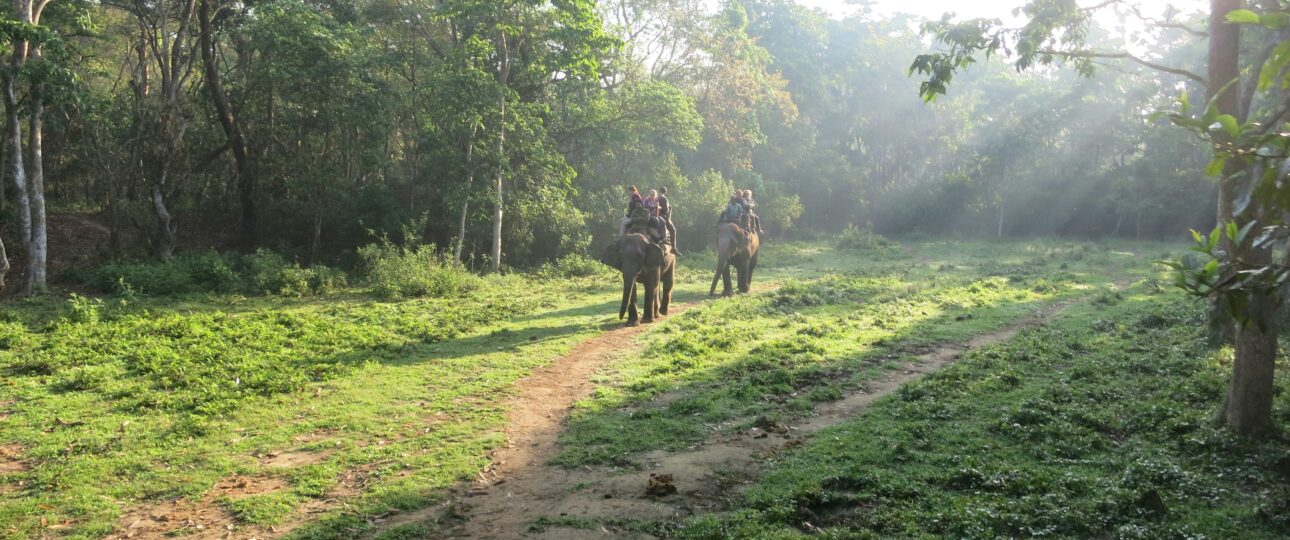
Chitwan National Park, located in the subtropical lowlands of Nepal near the Indian border, is
one of the country’s most renowned national parks and a UNESCO World Heritage Site.
Established in 1973, this park spans approximately 953 square kilometers and serves as a vital
sanctuary for wildlife conservation. It is crucial in protecting endangered species such as the
Bengal tiger, the one-horned rhinoceros, and the gharial crocodile. The park’s rich biodiversity
includes over 68 species of mammals, more than 500 species of birds, and a variety of reptiles
and amphibians, making it a hotspot for nature lovers and eco-tourists alike.
Visitors to Chitwan can engage in numerous activities to experience its natural beauty firsthand.
From thrilling wildlife safaris to serene canoe rides along the Rapti River, the park offers diverse
opportunities for adventure. Additionally, cultural tours provide insight into the Indigenous
Tharu community’s traditions further enrich the visitor experience. Chitwan National Park is
a testament to Nepal’s commitment to wildlife conservation and sustainable tourism.
History and Establishment of Chitwan National Park

Chitwan National Park’s history is rooted in its establishment as Nepal’s first national park in 1973. It transitioned from a royal hunting ground to a protected area focused on conservation. It was significant in addressing the declining populations of various species due to poaching
and habitat loss. In 1984, its designation as a UNESCO World Heritage Site underscored its
global ecological importance and facilitated international support for conservation efforts.
The park has since become a model for community-based conservation, engaging local
populations in sustainable practices that benefit wildlife and human communities. Collaborative
efforts between park management and organizations like WWF have enhanced its conservation
strategies, contributing to successful recovery stories for species such as the one-horned
rhinoceros, whose population has increased significantly due to stringent anti-poaching measures
and habitat restoration initiatives.
Geography and Natural Beauty
Chitwan National Park is characterized by its diverse geography, which includes lush sal forests,
expansive grasslands, marshes, and river systems like the Rapti River. The terrain varies from
lowland valleys to gentle hills, creating an ideal habitat for many flora and fauna. The park’s
climate ranges from warm tropical summer to cooler winter temperatures, fostering rich
biodiversity.
The park’s vegetation types are crucial for supporting its unique ecosystem. Sal forests dominate
The landscape covers about 70% of the area, while grasslands account for approximately 20%.
These habitats are vital for wildlife and play a role in local cultural practices among indigenous
communities that rely on these resources sustainably.
Biodiversity and Wildlife
Chitwan National Park is celebrated for its exceptional biodiversity. It houses iconic species such
as the Bengal tiger, greater one-horned rhinoceros, gharial crocodile, and various bird species,
including the endangered Bengal florican. The park is home to over 50 mammal species and
more than 525 bird species, making it an essential site for wildlife enthusiasts.
Conservation efforts in Chitwan have led to impressive recoveries. For instance, the Bengal tiger
population has risen from dangerously low numbers to approximately 128 individuals today. These successes are attributed to effective anti-poaching strategies and habitat management
practices that ensure these species thrive in their natural environments.
Moreover, Chitwan is a critical research site for understanding ecological dynamics and
developing conservation strategies that can be replicated in other regions facing similar
challenges.
Ecotourism and Activities in Chitwan National Park
Ecotourism is a cornerstone of Chitwan National Park’s appeal. Visitors can participate in
various activities promoting responsible tourism while enjoying the park’s stunning landscapes.
Popular options include:
Wildlife Safaris: Explore the park via jeep or on foot with experienced guides who provide
insights into local flora and fauna.
Canoe Rides: Paddle along rivers where visitors can observe wildlife from a unique vantage
point.
Bird Watching: With over 500 bird species recorded, bird watching is particularly rewarding
during migration seasons.
Cultural Tours: Engage with the Tharu community to learn about their traditions and lifestyle.
Accommodations range from luxury lodges to budget-friendly options that blend seamlessly with
nature. Responsible tourism practices are emphasized to minimize environmental impact while
ensuring local communities benefit from tourism revenue.
Conservation Efforts and Challenges
Chitwan National Park faces ongoing challenges such as habitat encroachment, human-wildlife
conflict, and climate change impacts. However, concerted conservation efforts are underway to
mitigate these issues. Initiatives include anti-poaching patrols, wildlife monitoring programs, and
community engagement strategies to foster coexistence between humans and wildlife.
Collaborations with national and international organizations enhance these efforts by providing
funding and expertise necessary for effective conservation management. Despite these
challenges, the park’s commitment to protecting its biodiversity remains steadfast.
Conclusion
Chitwan National Park is a vital conservation area in Nepal that offers unparalleled experiences
for nature lovers and eco-tourists alike. Its rich biodiversity showcases Nepal’s natural heritage
and highlights the importance of sustainable tourism practices that support wildlife protection
efforts. A visit to Chitwan allows one to witness stunning landscapes and diverse
wildlife and contribute meaningfully to conservation initiatives to preserve this
remarkable natural treasure for future generations.