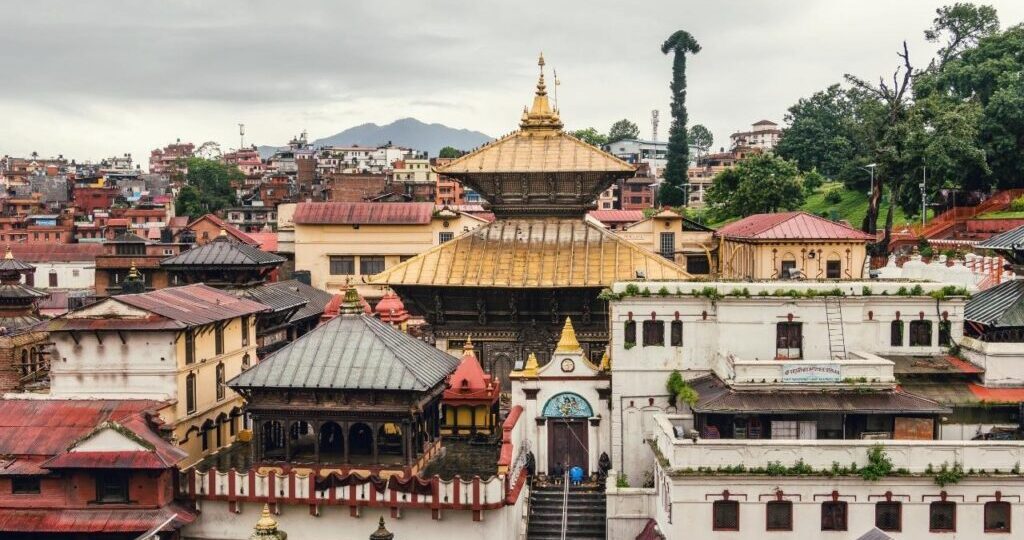
As the daylight starts to fade away the people start to gather and find themselves seats on the stairs. The aarati takes place opposite to Pashupatinath temple on the other side of Bagmati river bank. One by one the stairs on both sides gets full with people of different ages but mostly by the devotes who came to worship Pashupatinath.
When it gets dark the whole area around Pashupatinath starts to sparkle like a gold from the yellow light place around it. The opposite side is bright using fluorescent light. The whole area waits in anticipation of the commencement of the ritual while the preparation is taking place.
The current main temple of Pashupatinath was built at the end of 17th century. It is one of the holiest destinations following Hindu religion. Lord Shiva is the main god worship in Pashupatinath temple.
Before starting Aarati
There is a crowd of devotees visiting Pashupatinath temple and it gets more crowded during Mondays.at the end of the day, there is a tradition of praying to Lord Shiva in Pashupatinath. This evening aarati is being observe every evening since 2006 and has become one of the religious and tourist attractions of the Pashupatinath temple area. The aarati takes place for around 2 hours every evening throughout the year.
As the sun goes down the preparation for aarati starts on the other side of the Bagmati river. There are small temples and a lot of stairs to observe the aarati. Three priests from the temple come for the aarati and final preparation of ritual is started. The name of the people who have contributed for that days aarati is shout out and the religious song is played. During all of this is happening the devotees take their place and some get ready to dance as the ritual begins.
How the Aarati in Pashupatinath started
The ritual starts by burning the scented sticks call dhoop and circled in a specific motion of hands in all four directions by the three priests. The movement follows the religious song called bhajan, that is continuously sang throughout the ritual. Once all the four side is finish praying the next ritual takes place immediately. After the completion of the first ritual a coal incense burned with vegetable oil and different kinds of wood is offer on the same way as before, in a circular motion toward the 4 directions by the three priests.
As this ritual comes to conclusion a group of devotee starts lighting an oil lamp with 54 Diyos made from cotton wick dipped in an oil. After all, three oil lamps are light the priests pick up the lamp, face toward the main temple and chant mantras while moving their hands in circular motion. After this ritual, a bowl of fire is raise and worship in the same way as the other rituals. During all of this is taking place the songs get more and more intense. As one ritual completes the devotees cry out the name of Lord Shiva. This goes on for one more hour and the ritual is end.
People during Aarati
Most of the area around the temple is free to roam by anybody. Only the main temple is off limit to the people who are not Hindu. The camera and video are also allow during the ceremony if you want to capture the ceremony. But the spiritual presence and intense devotees. It is really interesting to see during the time that cannot just be expressed in photos or videos.
The whole area gets filled with the sound of clapping of people while the prayer is going on. This is one of those moments that you will find pure devotion toward the spirituality and faith. This celebration has brought thousands of devotees to Pashupatinath and has become one of the main attractions for both international and domestic tourist.